
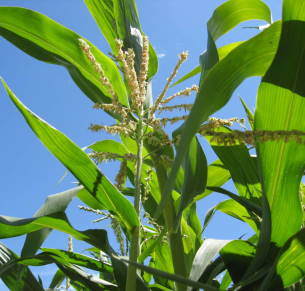
 Maybe in just a few more days the corn will be ready to eat. The seed catalogs said these varieties should be ready to harvest in about seven weeks. However, perhaps because it has been pretty cool here this summer, it has taken several weeks longer than that. Also, the catalog entry for one of the varieties indicated that it would be about six feet tall and that the other six and a half feet. They got the first one correct, but half the other patch is more like eight feet tall. Not that I care as long as they fill out lots of sweet delicious ears.
Meanwhile we got several pounds of green beans from the initial two square feet planted and have much of it in the freezer for later. The bean plants are pretty much past their prime and I should probably pull them out next week. A later second planting did not do so well because the growth from the first batch and other veggies in neighboring squares encroached on their space. That is fine – we will still get enough from the second batch to have fresh picked green beans for a few meals.
The shelling peas got a bad case of powdery mildew on the lower parts because the vegetation was too thick and close together on the shadier side of the beds. It looks like they are a lot taller than expected and would have been better on a trellis or other support. While the top half now seems like it will be producing nicely, the powdery mildew has spread through the squash and pumpkin leaves and makes for a not so pretty garden. Hopefully, we will do better with how things are planted next year.
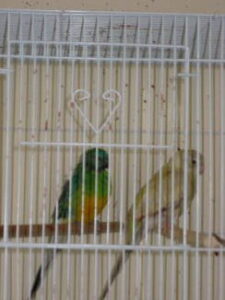 This morning I found the area around the two red rump pair cages looking like a crime scene. Blood was spattered all over the cage, the nearby walls and ceiling. Apparently something had caused the birds to have a night fright episode and they injured themselves flapping around in the dark despite the night lights. The bloodshed was an indirect result of something that happened a few weeks ago. Then, I just found lots of red rump wing feathers scattered around. The birds managed to drop all of their feathers on one or both wings. It is likely a small earthquake had disturbed them in the middle of the night. So now, instead of having one or two wing feathers growing back in as they should with a normal moult, they have a wingful or two of growing feathers. While they are growing in, these feathers have a blood supply and, if broken, can cause serious blood loss to the bird. The first aid recommendation for broken blood feathers is to pull out the feather in order to stop the bleeding.
 I have no idea if the birds managed to do that to themselves or if the feathers just came out as a result of the panic in the cages. The evidence on the floor this morning shows that both of the hens lost at least three blood feathers last night, while the other red rumps lost one each. Meanwhile the other birds housed in adjacent cages showed no signs that they were bothered by the disturbance.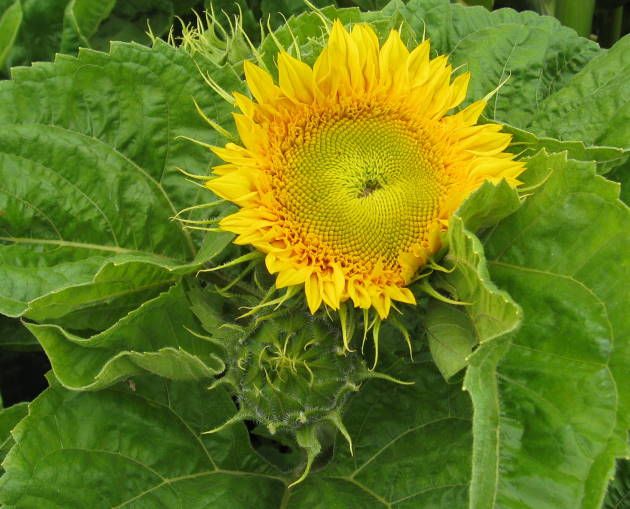
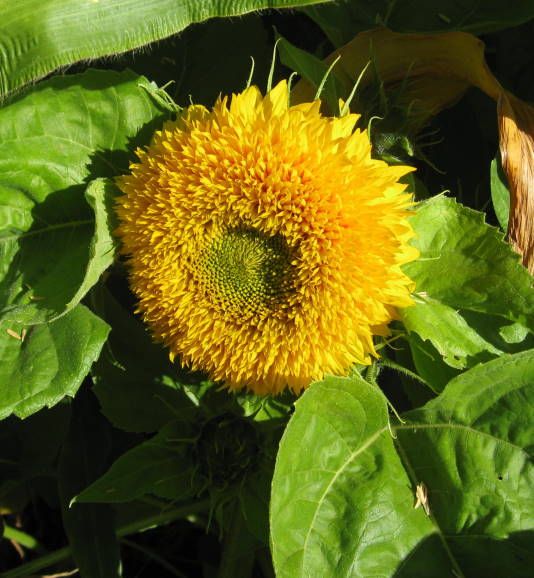
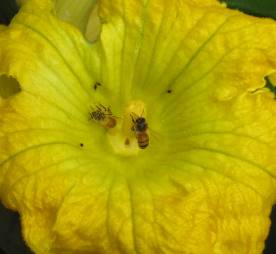 The honeybees are now including the garden in their daily routine. We went from none to a couple dozen workers buzzing around the flowers. No longer do I need to worry about zucchini blossoms getting pollinated. I am back to the usual problem with zucchini — what to do with so many of them. The other squash and pumpkins have also started showing fruit as a result of the bees’ efforts. We should have several nice pumpkins for Halloween decorations and Thanksgiving pies.
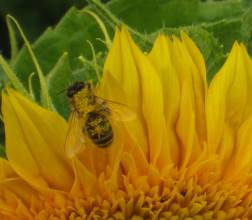 If I ever had any doubt about the bees acting as pollination agents, it would have been removed by a bee I saw a couple weeks ago near the just opening sunflowers. I had heard a buzzing and when I first caught a glimpse, I saw yellow and thought it might be a pesky yellow jacket. But then it landed on a sunflower and I discovered what the yellow color was — lots of pollen on the back of the honeybee.
 A few days ago I brought in a handful of parsley from the garden. When I rinsed it off, I discovered that there were two uninvited caterpillars munching on the leaves. I shook them off outside and finished.
 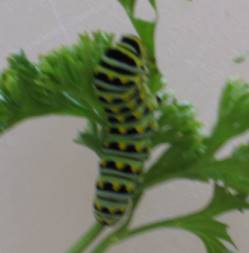 This morning I was completely surprised by what I saw in the bug jar. They had changed their appearance overnight and now were black and green striped with yellow spots. And I was pretty sure I had seen something like that among the online photos. Sure enough, they matched the caterpillar of the