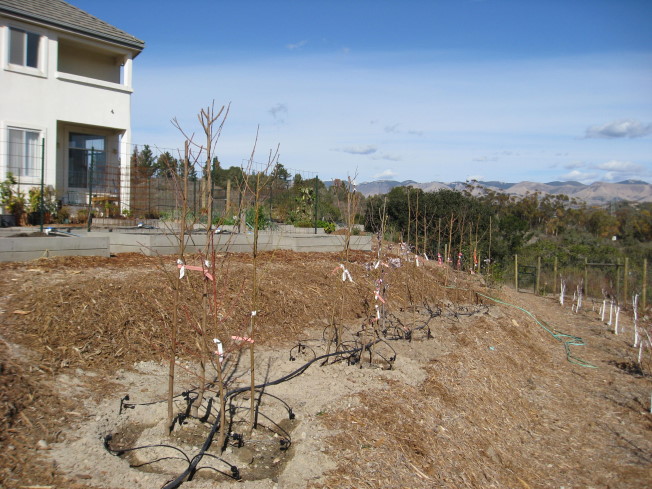
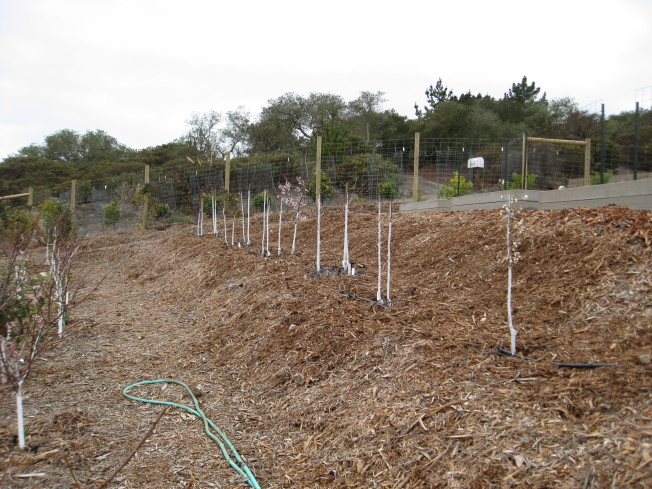
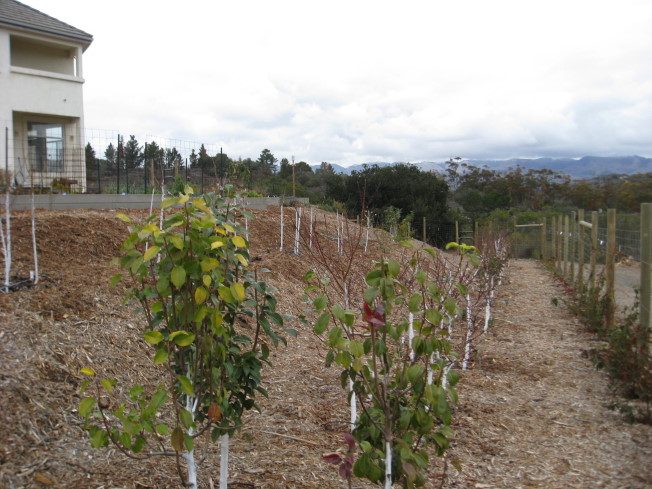
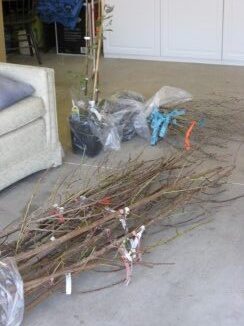
 Planting phase two of the orchard was not nearly as big a chore as was the initial row planting last year. Primarily because the ground had been prepared and holes dug out (and refilled loosely) during the summer months.
The plan for what was to be planted changed several times between last January and when the orders were placed in late October / early November. The first change was the decision to make the orchard two terraced rows instead of a hillside. It started with leveling out some of the ground around the initial row. But it became pretty clear in a short time that walking back and forth across a hill was a lot harder than walking on a level surface. Thinking about the odds of a misstep in the future, a lot more shovel work went into the preparation and a terraced plan emerged
Then there was the huge chunk of sandstone discovered just below the surface in the center of the second row of the orchard. There was no way a self-respecting fruit tree could exist with that where the roots should go, so it was excavated, the soil added to the terrace and perhaps it will eventually seem decorative.
The bench graft apple trees ordered in March were yet another change to the plan. They filled most of the terrace to one side of the rock outcropping. A trip to the local demonstration orchard created another influence on what was to be planted this winter. There was a grouping of peach and nectarine trees in full bloom. It was lovely, and there were also daffodils planted in the orchard under the trees. The daffodil part was a simple addition. I would have been looking for a place to plant those. The flowering trees turned out to be varieties I had not seriously considered, yet they seemed to have good reviews for taste and had other good qualities.
So the Asian pears, quince and persimmon were preempted in favor of more peaches, nectarines, plums and apricots. It was supposed to be a three to four year plan. I will probably find spots for the ones that got bumped off this year’s list before I am done.



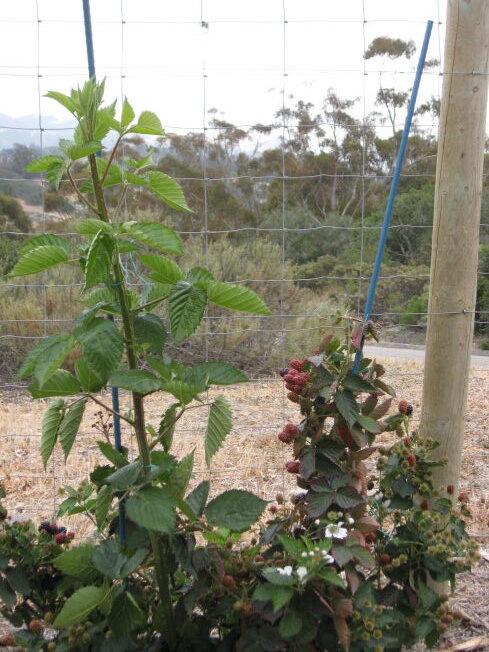
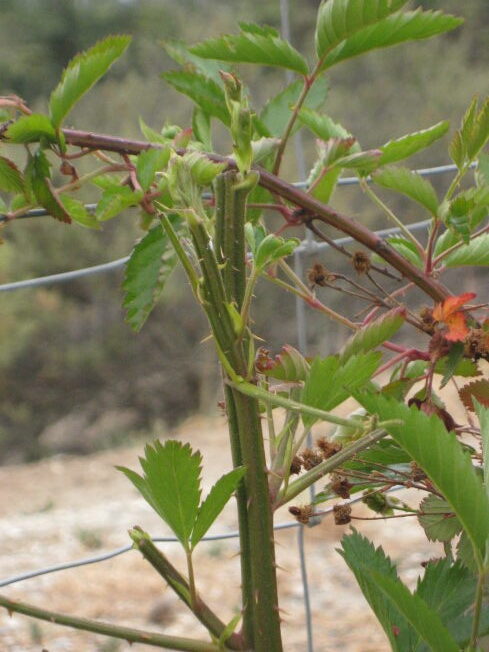
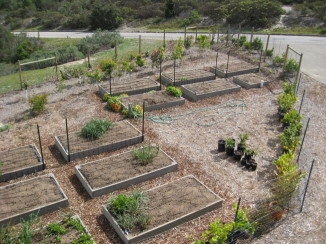 The garden for 2014 got started a whole month earlier than it did last year. According to the guide I found for my climate zone, it could have been done a month or so sooner. Since we had such a warm winter, that actually might have made a difference in when some of the veggies will be ready for the table. However, as soon as it was officially spring, the weather returned to more normal (cool, coastal foggy mornings) and I could just imagine the corn and green bean seeds shivering in the ground instead of sprouting.